what portion of us healthcare spending is due to hospitals
This chart drove explores recently released National Health Expenditure (NHE) data from the Centers for Medicare and Medicaid Services. These information offering insights into changes in health spending over fourth dimension every bit well as the driving forces behind spending growth. The data specifically evidence how health spending and consumption in 2020 deviated from historic trends due to the COVID-19 pandemic.
Total health expenditures increased steeply in 2020
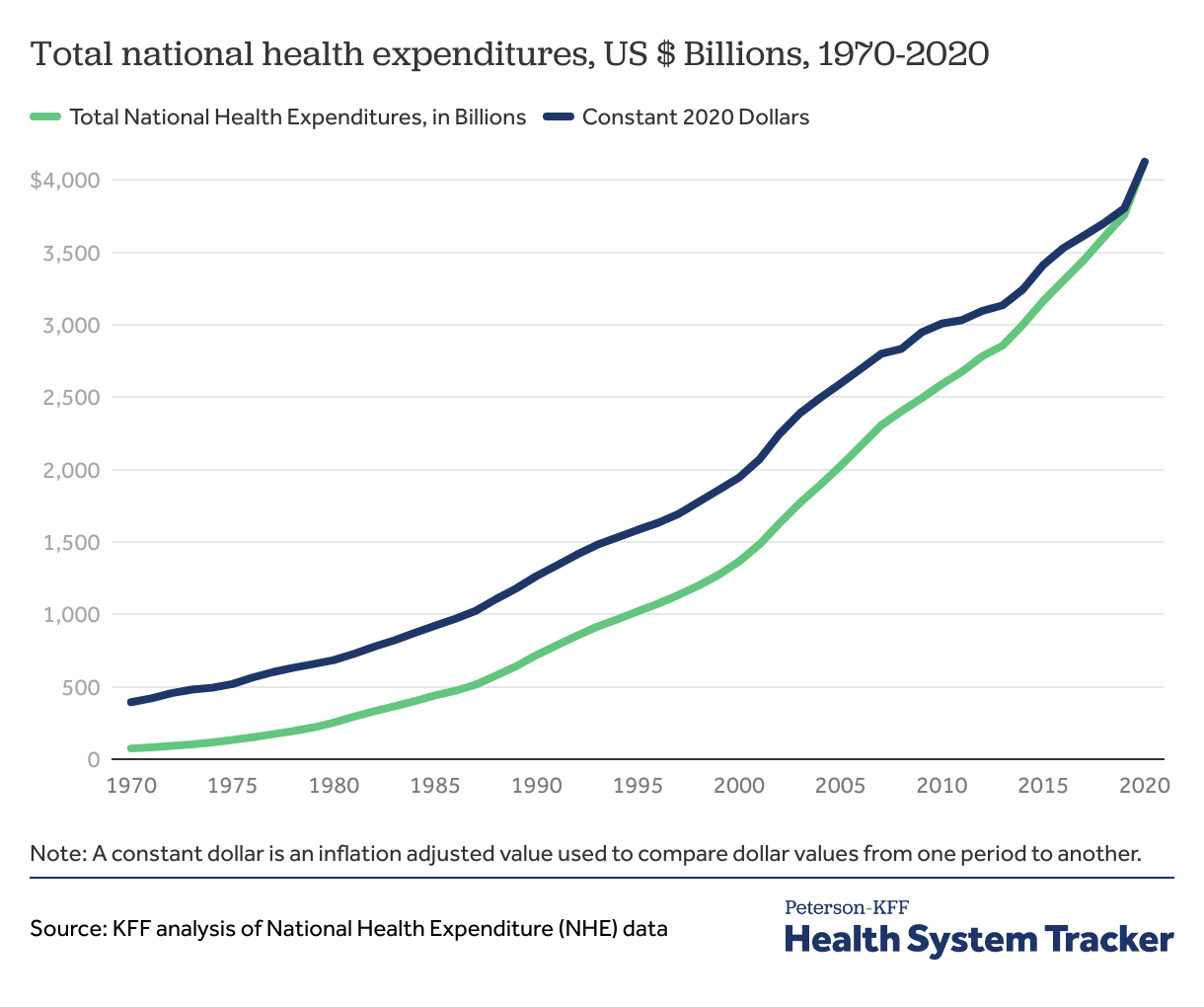
Health spending totaled $74.1 billion in 1970. By 2000, health expenditures had reached about $one.4 trillion, and in 2020 the corporeality spent on health tripled to $4.1 trillion. Health spending increased past 9.7% from 2019 to 2020, much faster than the iv.iii% increase from 2018 to 2019. The average annual growth in health spending from 2010-2019 was four.2%. Total health expenditures represent the corporeality spent on wellness care and related activities (such as administration of insurance, wellness research, and public health), including expenditures from both public and private funds.
Spending is shown in terms of both nominal dollar values (not inflation-adjusted) and constant 2020 dollars (inflation-adjusted based on the personal consumption expenditures (PCE) index).
Growth in wellness spending from 2019 to 2020 was driven in part by an increase in public health spending
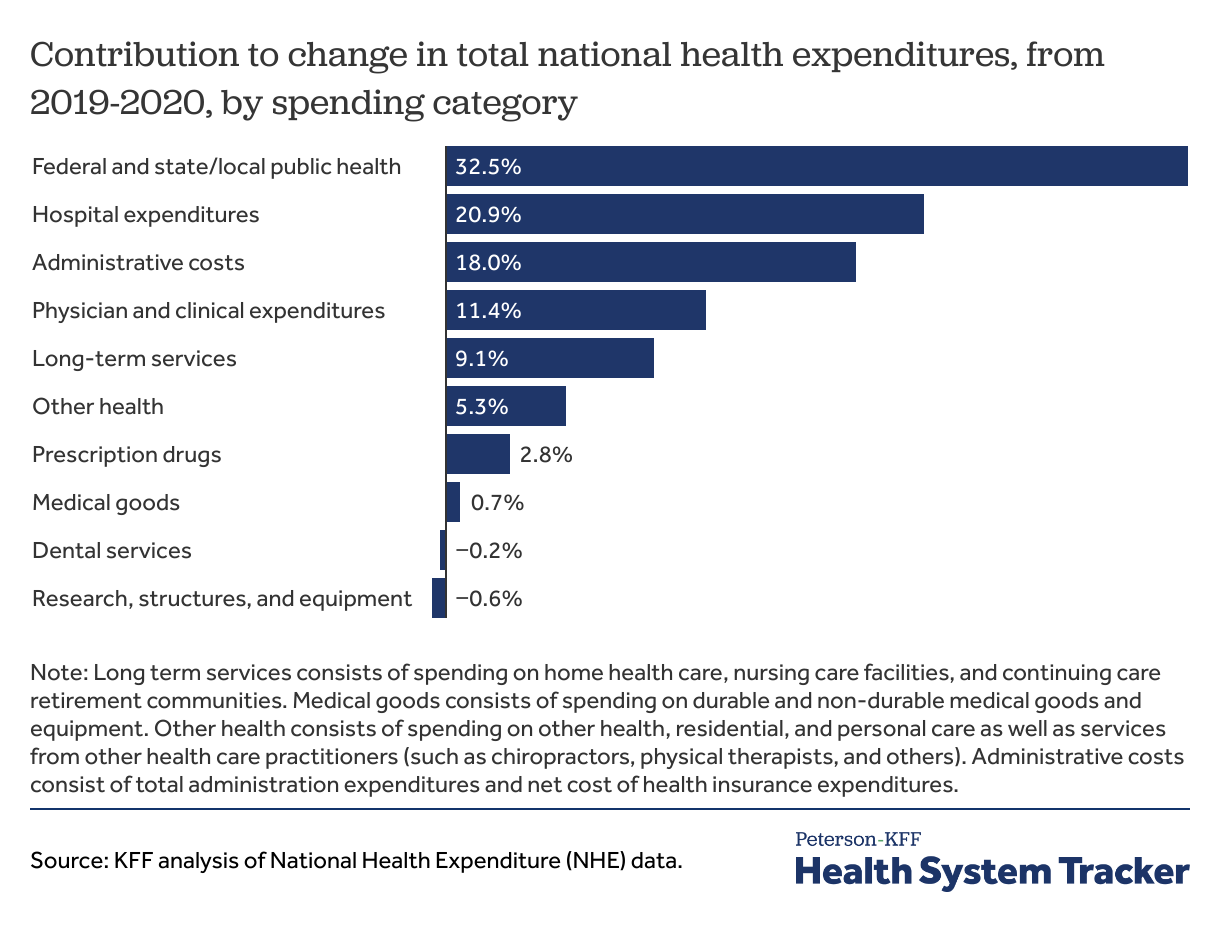
Full national health expenditures grew by nearly $365 billion in 2020 compared to 2019. Nearly ane-third (nearly $119 billion) of that growth in spending can be attributed to the increase in spending on public health, which includes federal spending to develop COVID-19 vaccines under Operation Warp Speed, strategic stockpiles of drugs and vaccines, and health facility preparedness. An increase in hospital expenditures contributed 20.9% of the growth, which reflects increased federal payments and loans to hospitals for COVID-19 relief (through the Provider Relief Fund and Paycheck Protection Programme), as well equally increased Medicaid spending. Meanwhile, health spending on dental services and research, structures, and equipment declined from the prior year.
Spending on public health activities and federal programs including the Provider Relief Fund and Paycheck Protection Plan drove the nine.7% increase in overall wellness spending from 2019 to 2020; when these spending categories are excluded, overall health spending increased only 1.9% from 2019 to 2020. Wellness services spending plunged early in the pandemic as intendance was delayed or cancelled.
Federal spending on public health increased dramatically in 2020
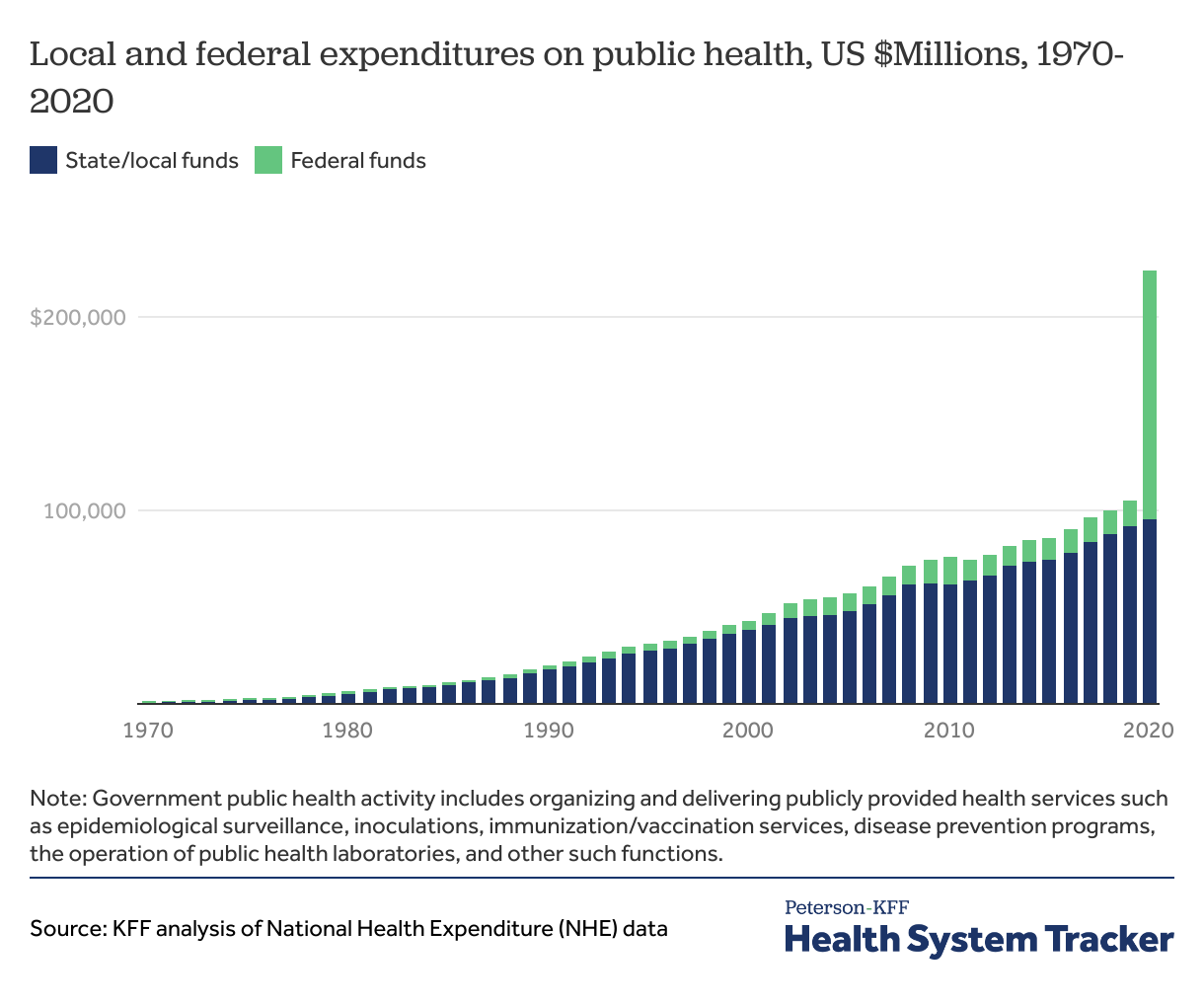
Spending on public health grew sharply from 2019 to 2020, driven by federal spending in response to the COVID-19 pandemic. Federal public health spending increased 864%, from $13.three billion to $128.2 billion. Meanwhile, state and local public health spending grew 4.2%, in line with previous years.
On a per capita basis, health spending experienced an uptick in 2020
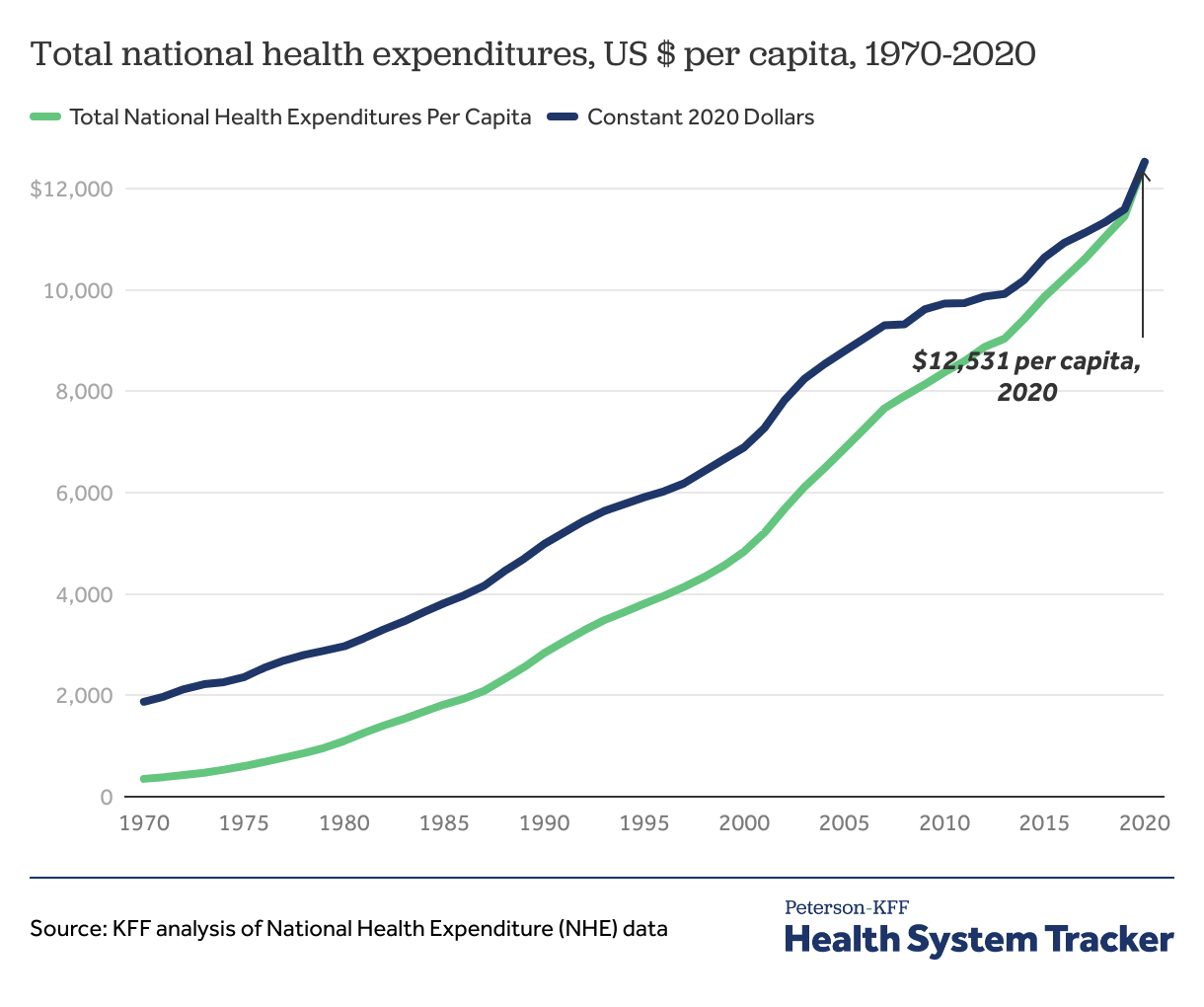
On a per capita basis, wellness spending has increased sharply in the concluding 5 decades, from $353 per person in 1970 to $12,531 in 2020. In constant 2020 dollars, the increment was from $one,875 in 1970 to $12,531 in 2020.
Health spending accounts for nearly i-5th of the U.Due south. economy
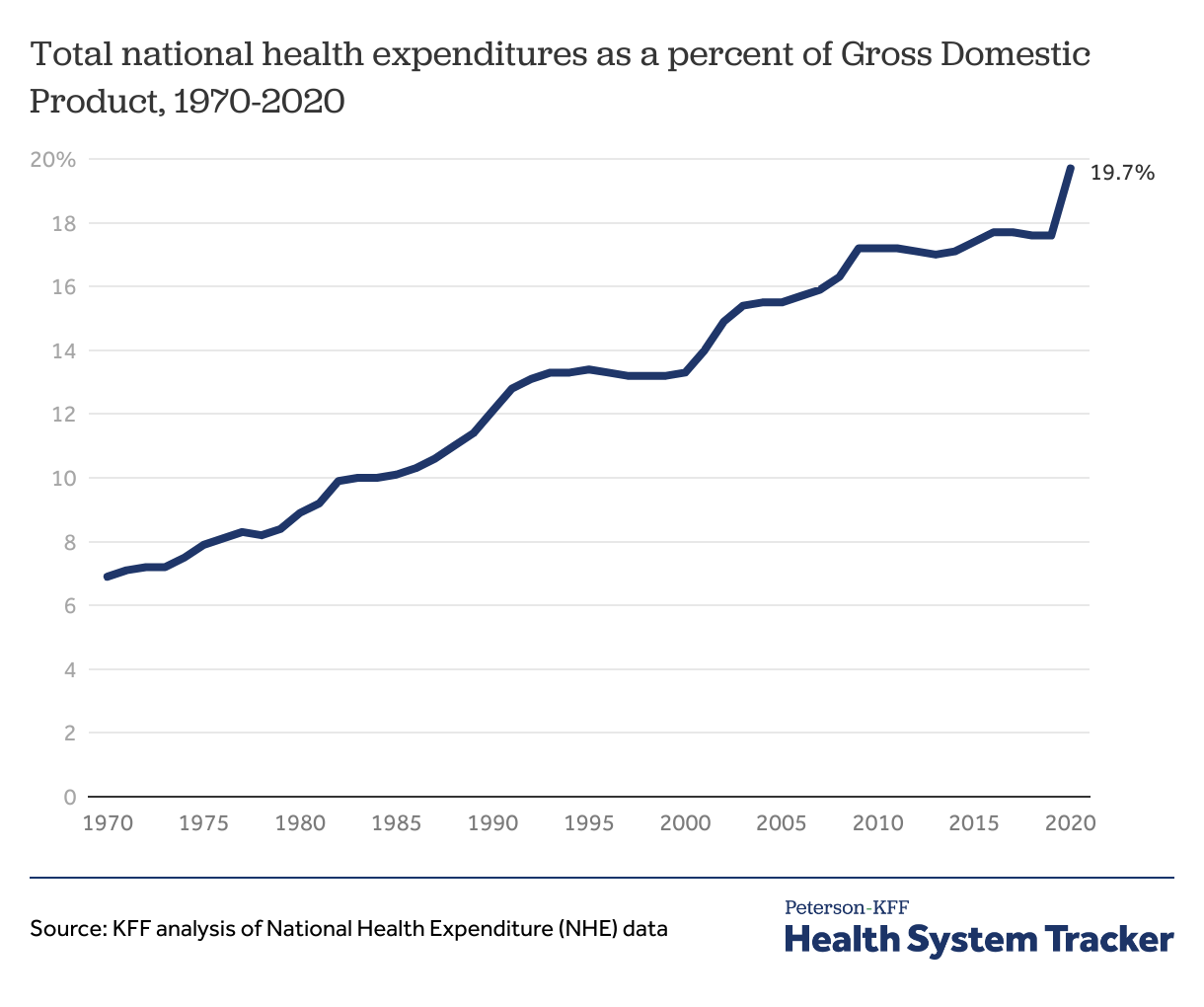
The share of the gross domestic product (Gross domestic product) devoted to health care reached 19.7% in 2020, an uptick from prior years. While the pandemic collection increases in total health spending in 2020, GDP declined 2.2% that year.
Health spending growth slowed in recent decades but consistently exceeds Gross domestic product growth
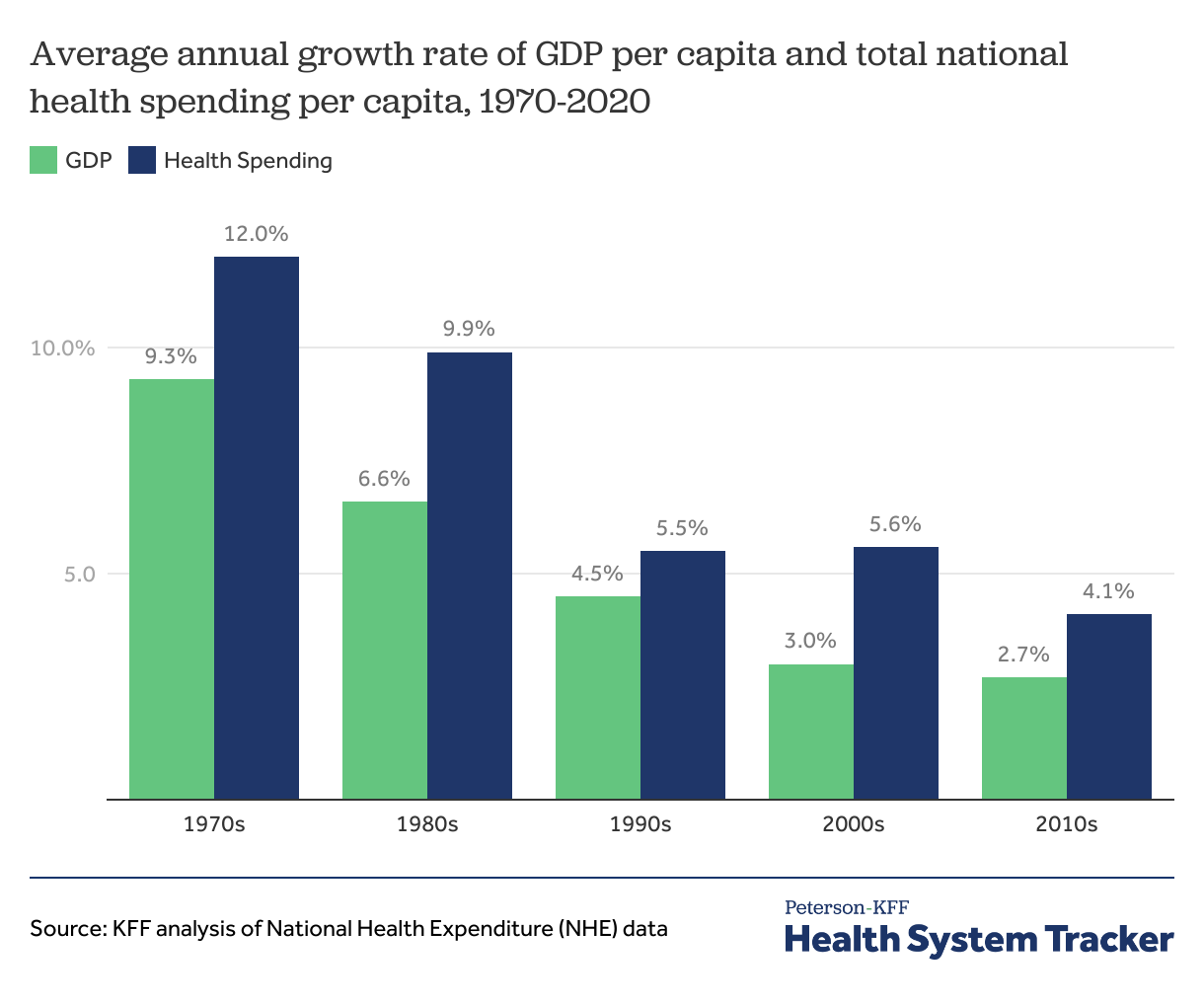
From 1970 through 1980, the average annual per capita growth in the U.Southward. economic system was 9.3% per year, compared to health spending growth of 12%. Although health spending growth has since chastened, it generally continues to outpace growth of the economic system.
In the last decade, spending growth on hospitals, physicians, and prescriptions has slowed
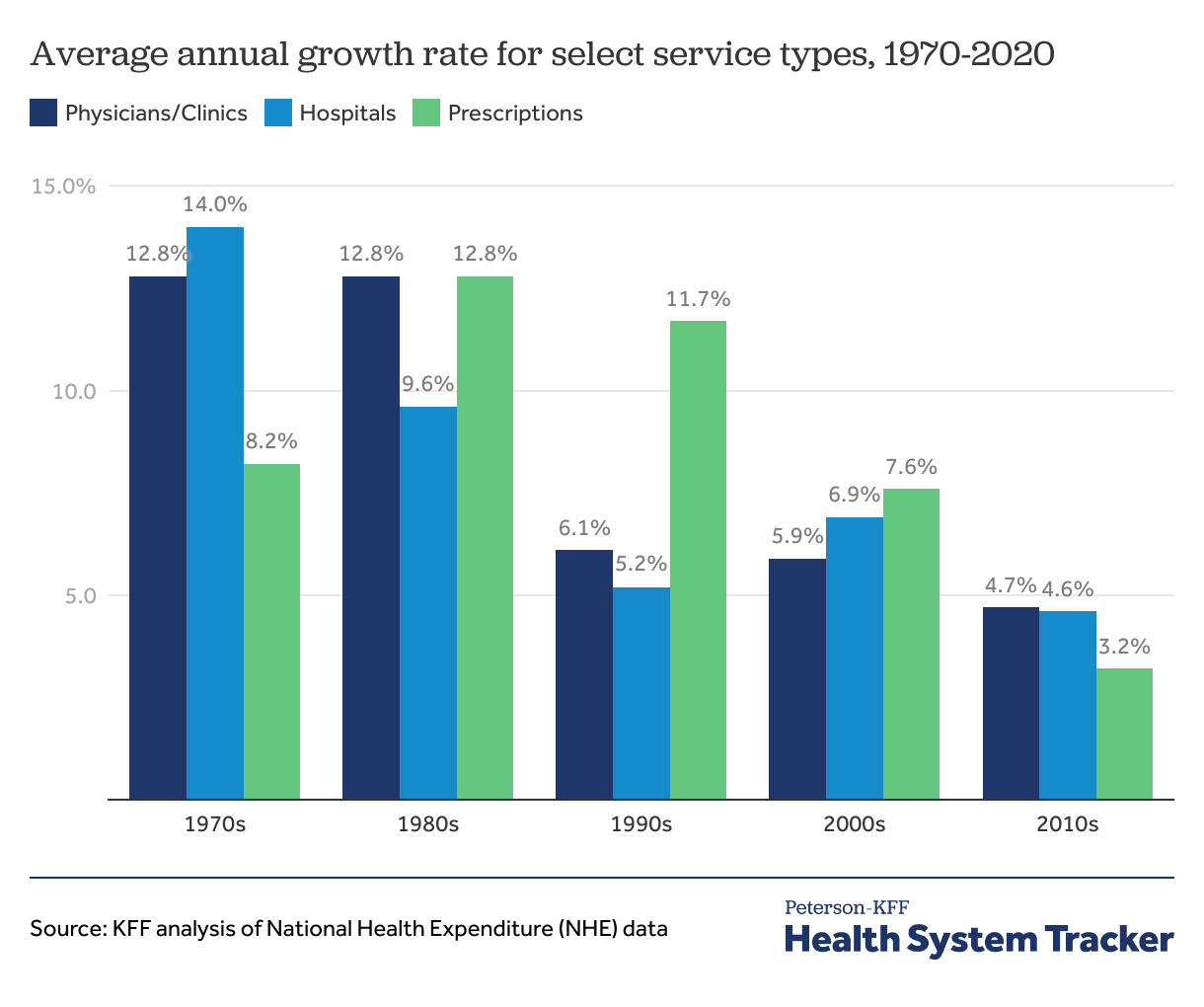
During the 1970s, growth in hospital expenditures outpaced other services, while prescriptions and physicians/clinics saw faster spending growth during the 1980s and 1990s. Between 2010 and 2020, average spending growth on prescription drugs and physicians/clinics was 3.2% and 4.7%, respectively. Spending grew at a similar pace for hospitals (4.6%).
Hospital and doctor services represent half of total health spending
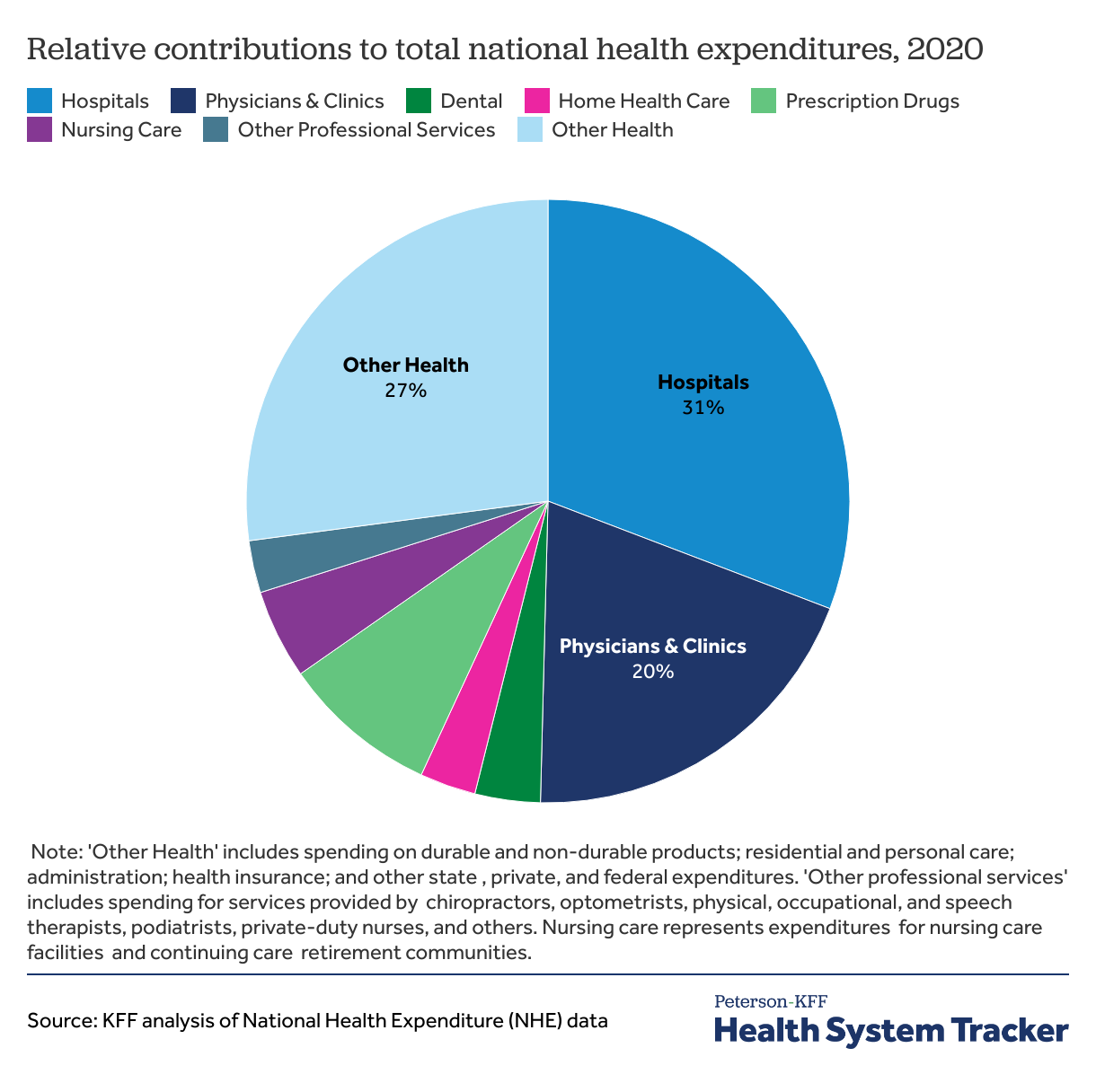
Hospital spending represented shut to a third (31%) of overall health spending in 2020, and physicians/clinics represented 20% of total spending. Prescription drugs accounted for 8% of total wellness spending in 2020.
Per capita out-of-pocket expenditures decreased in 2020
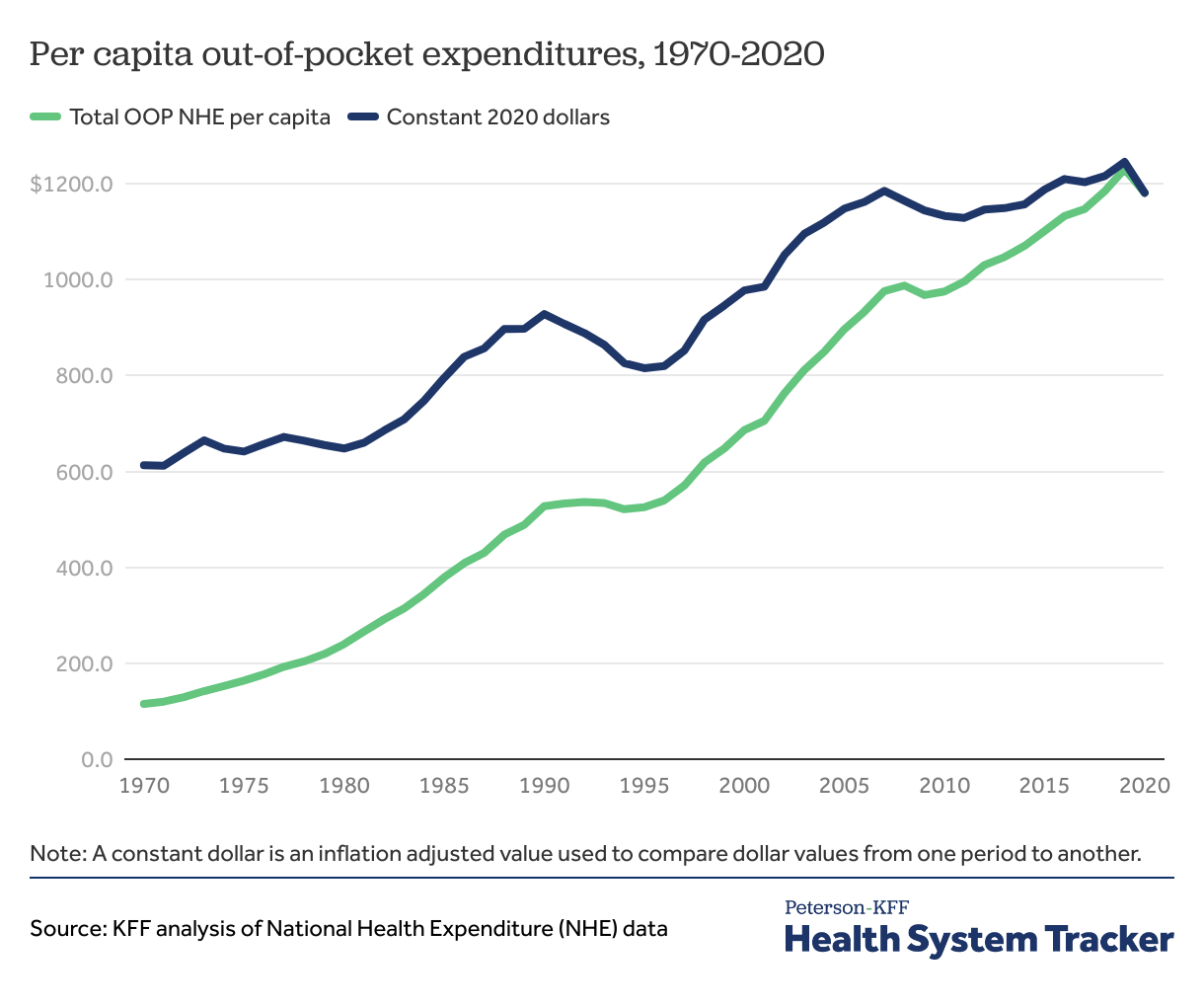
Out-of-pocket expenditures dropped in 2020, averaging $1,181 per capita. (Out-of-pocket medical costs practise not include the amount individuals contribute toward wellness insurance premiums.)
Utilization of services dropped precipitously in March and April of 2020, and slowly increased, though not quite to pre-pandemic levels. Furthermore, in 2020, many insurers voluntarily waived price-sharing for COVID-19 treatment.
Information technology remains to be seen how both COVID-19 and the forgone intendance due to the pandemic affect individuals' long-term health outcomes and overall costs.
Health insurance is a growing share of total wellness expenditures and out-of-pocket spending is a smaller portion than in 1970
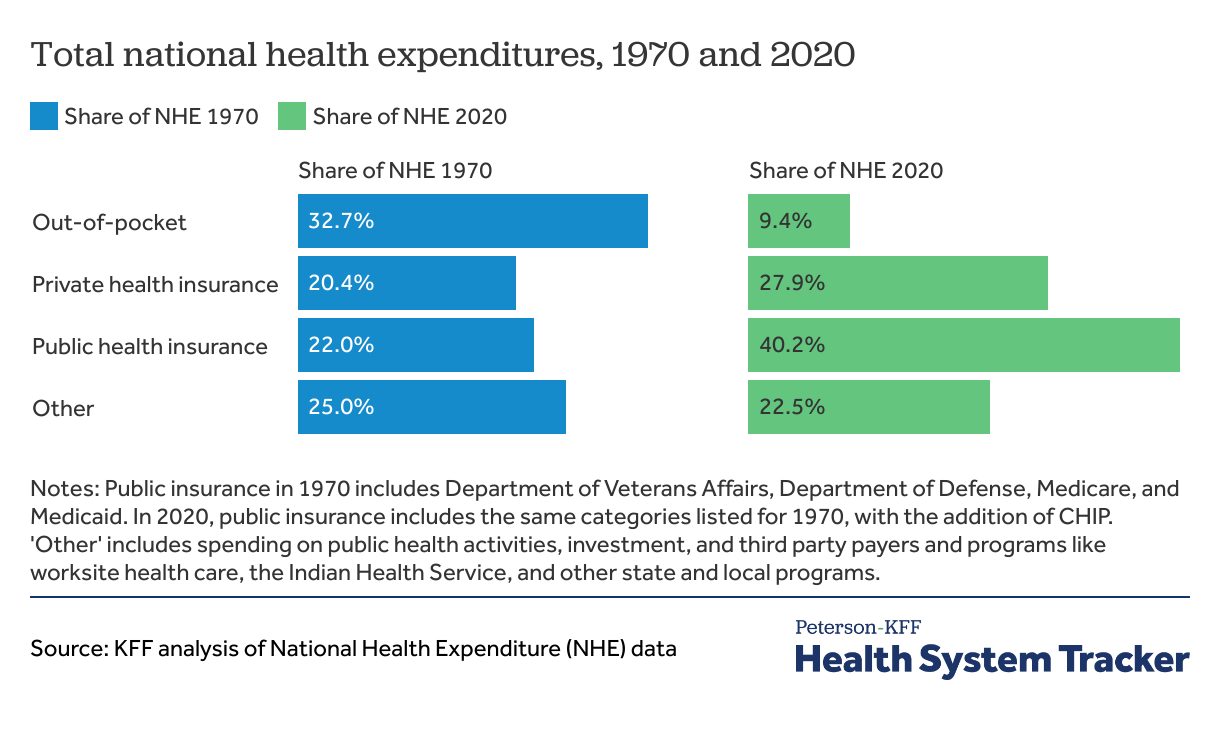
Virtually of the recent health spending growth is in insurance programs, both individual and public. Private insurance expenditures now represent 27.9% of total health spending (up from 20.4% in 1970), and public insurance (which includes Medicare, Medicaid, Chip, and the Veterans Assistants and Department of Defense), represented 40.2% of overall wellness spending in 2020 (up from 22% in 1970). Although out-of-pocket costs per capita have more often than not been rising, compared to previous decades, they now make up a smaller share of full wellness expenditures.
On a per enrollee basis, private insurance spending has typically grown faster than Medicare and Medicaid spending
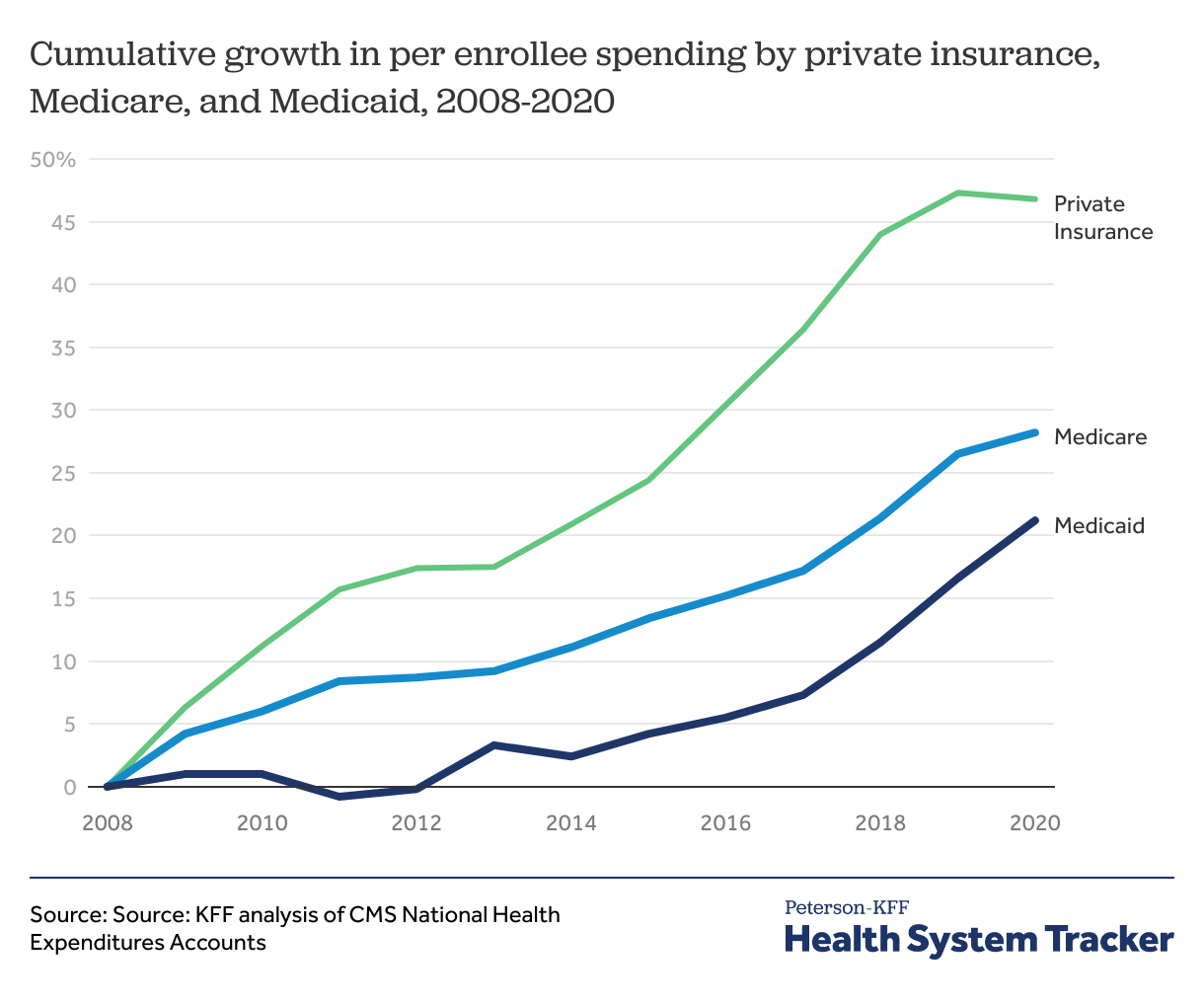
Per enrollee spending by individual insurance grew by 46.eight% from 2008 to 2020 — much faster than both Medicare and Medicaid spending growth per enrollee (28.2% and 21.2%, respectively). Generally speaking, private insurance pays higher prices for healthcare than Medicare and Medicaid.
However, per enrollee spending in private insurance declined past 0.4% in 2020 from 2019, while it continued to increase in Medicare and Medicaid (1.4% and 4.0% respectively) though at a slower pace than in 2019. Spending in 2020 was volatile – with increased care related to COVID, decreased use of services for not-COVID care, and higher spending related to insurance overhead and turn a profit – resulting in different patterns beyond payers.
Per enrollee spending growth has slowed in the past decade for all major payers
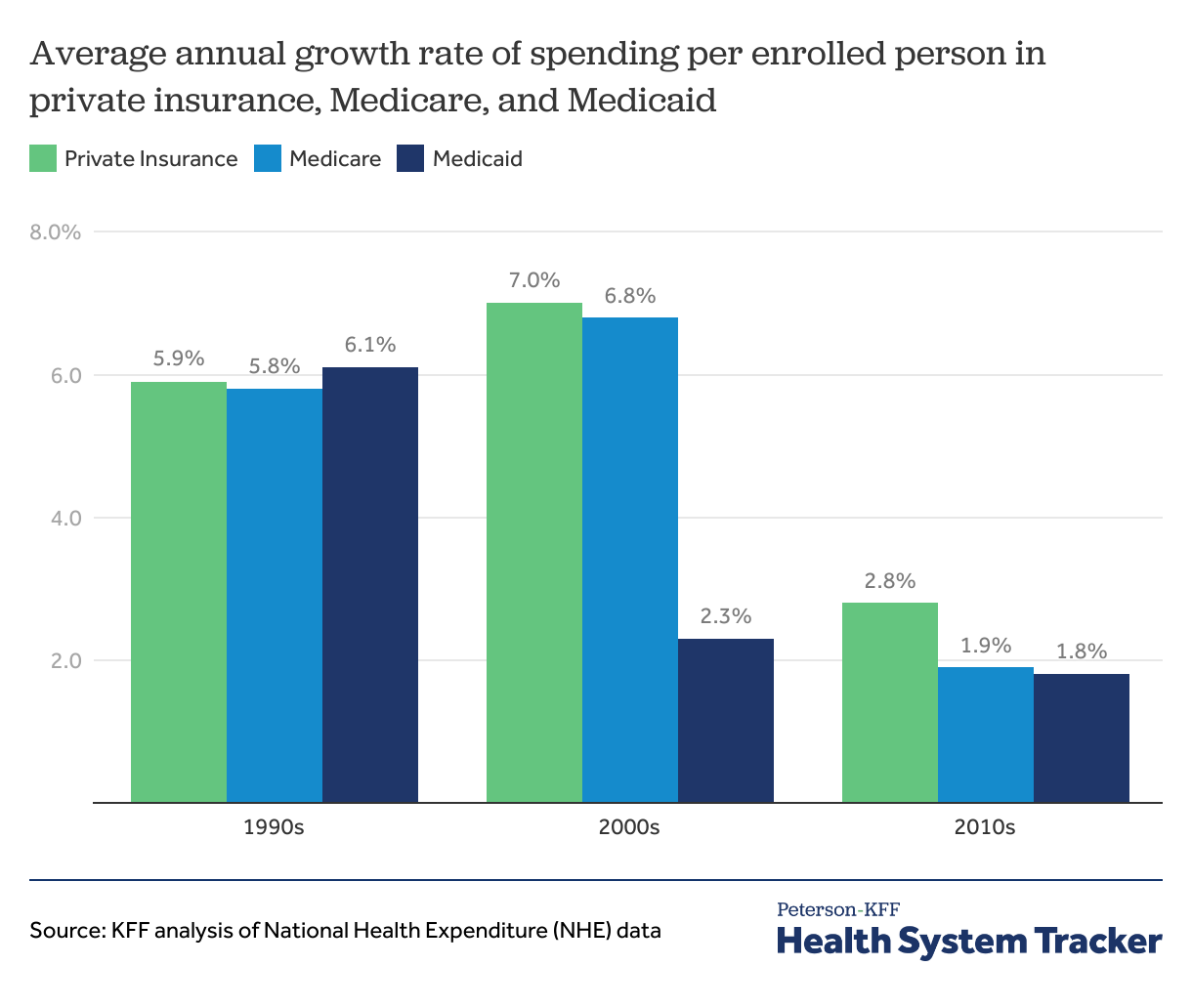
On a per enrollee footing, the average annual growth of Medicare spending was similar to that of private insurance over the course of the 1990s and 2000s. Average almanac spending growth per enrollee in Medicaid was similar to growth for Medicare and private insurance in the 1990s, but slowed in the 2000s while spending growth accelerated for the other major payers. More recently, per enrollee spending in Medicare and Medicaid has grown somewhat slower than per enrollee spending in private insurance.
Public spending on health exceeded private spending in 2020
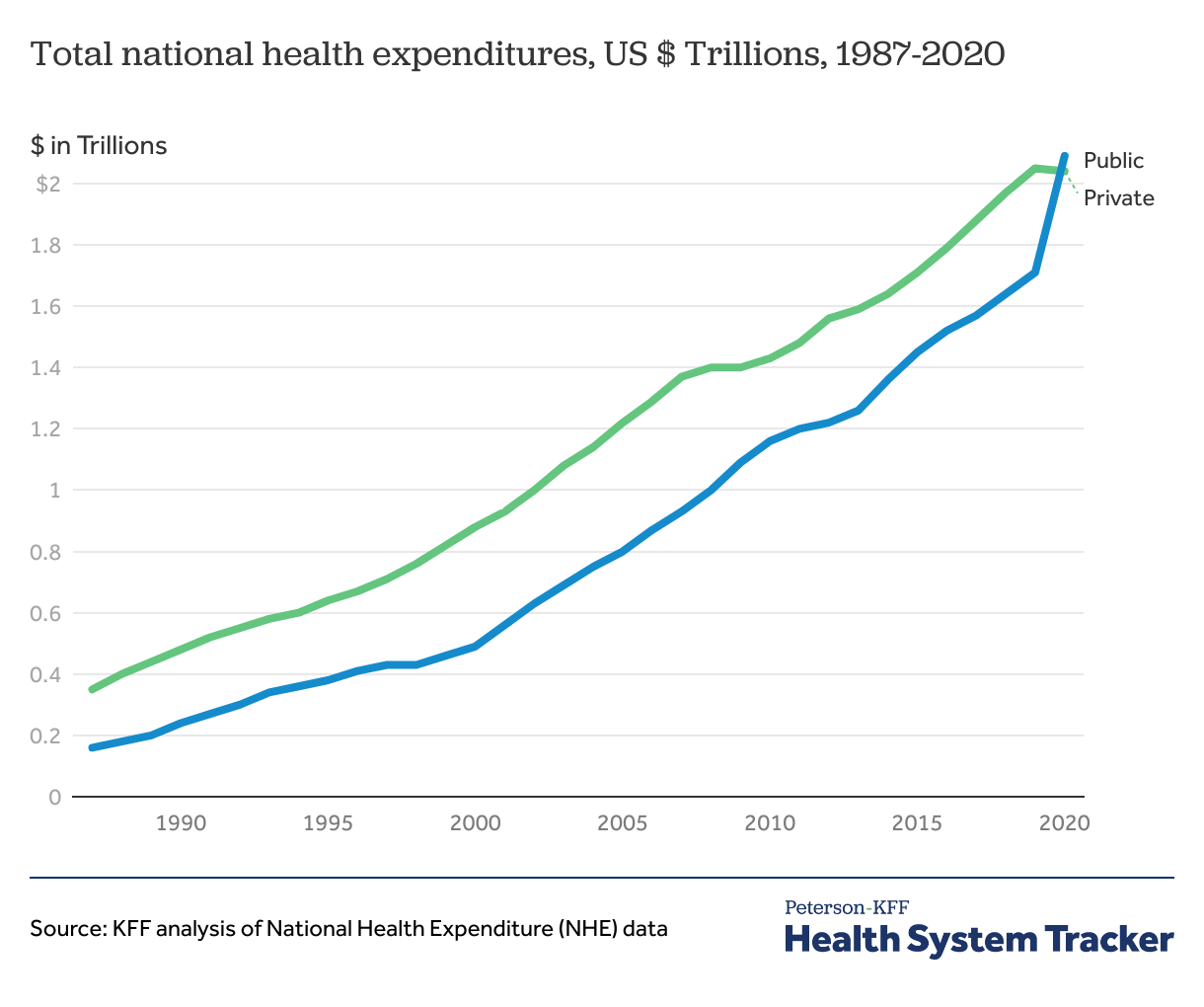
Public and private health spending have both grown substantially in the past few decades. In 1987, public sector spending accounted for just nether one third (32%) of total wellness spending. Public spending in 2020 represented half (51%) of overall spending. Public sector spending includes spending on insurance programs, such as Medicare and Medicaid, as well equally other government spending, such as spending on public wellness and research.
Health insurance and administrative costs have been increasing for several decades
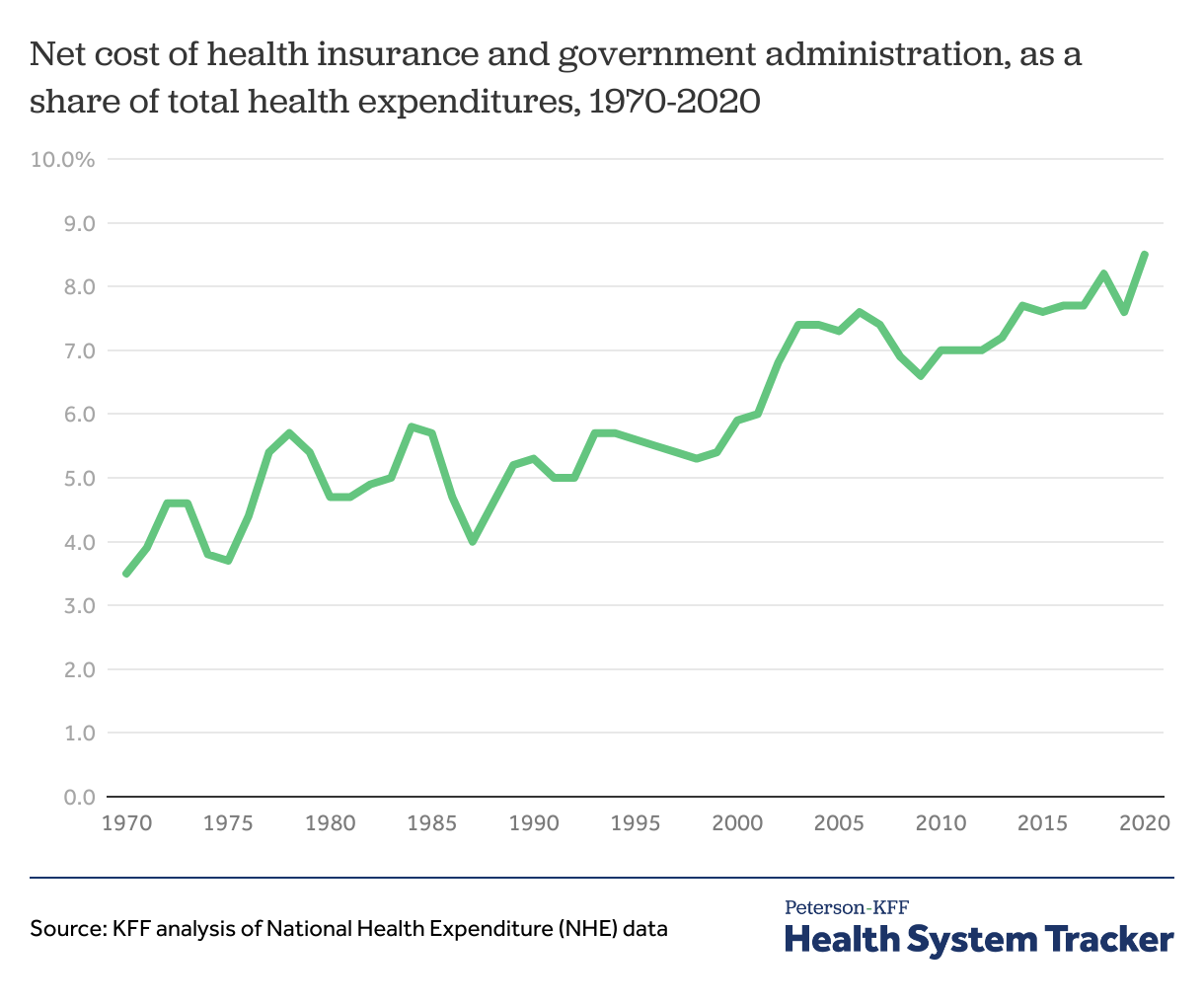
In 2020, authoritative expenses – which include the cost of administering private insurance plans and public coverage programs but not the administrative costs of health providers – represented viii.five% of total national health expenditures, up from near 3.5% in 1970, and 7.vi% in 2019.
Health utilization dropped dramatically in 2020, while prices increased modestly
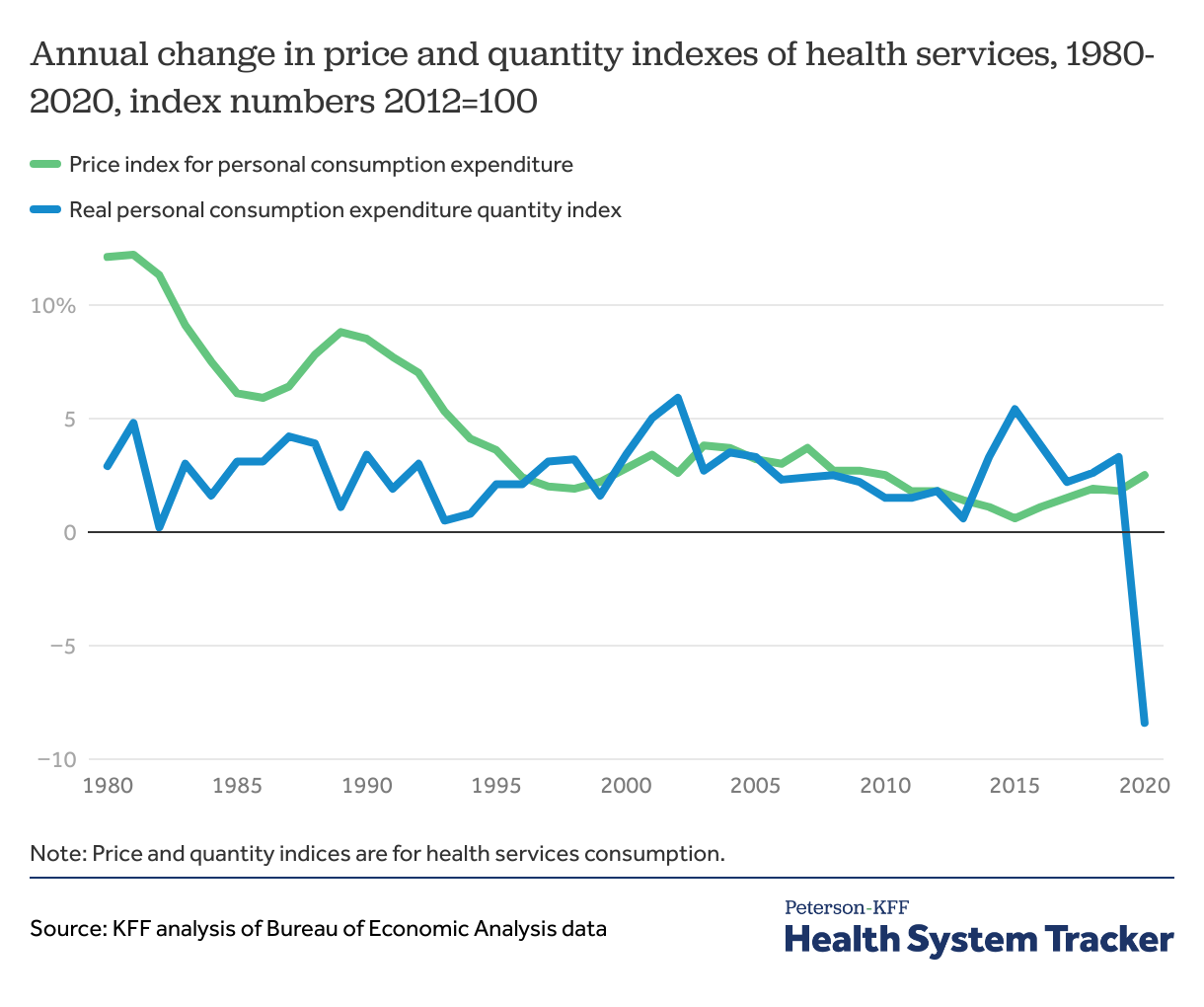
Health services spending is generally a part of prices (east.1000., the dollar amount charged for a hospital stay) and utilization (eastward.g., the number of hospital stays). In 2020, healthcare prices increased past two.5%, in line with previous years, just health services use dropped by 8.4%. The decrease in wellness utilization was largely driven past the COVID-nineteen pandemic, equally many health services, such every bit elective surgeries, were postponed or cancelled. Many individuals as well chose to forgo intendance to go along themselves and their families prophylactic.
Growth in toll and utilization of pharmaceuticals has varied over the past two decades
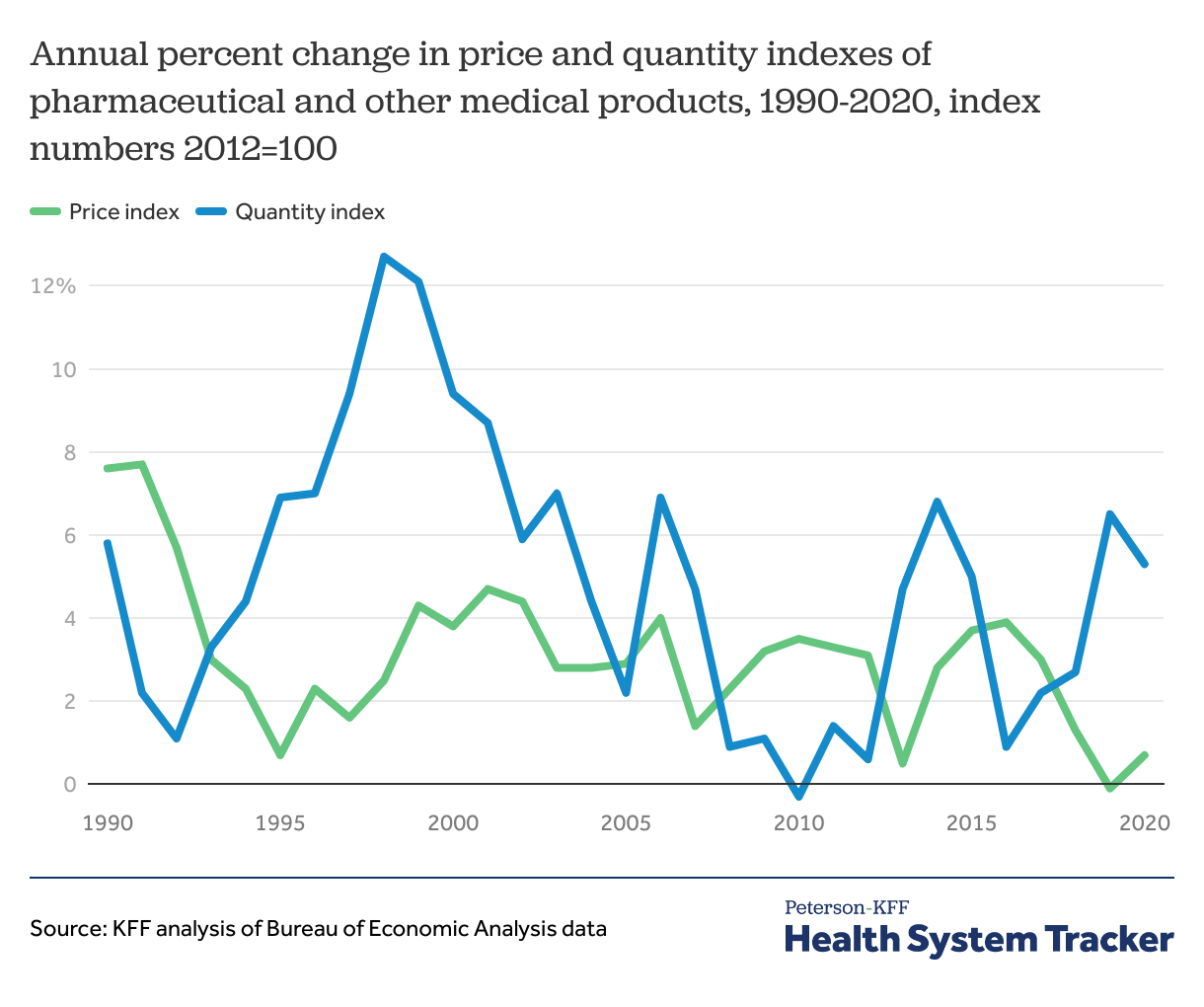
Due to the way drugs are selected for inclusion in the price index, information technology can take some time for new drugs to be incorporated into the index. The price index for drugs has grown fairly steadily since the mid-1990s (ranging in growth from nearly i% to five% annually), while the utilization index has changed more over fourth dimension.
National health spending per capita spiked in 2020, though general economical cost inflation was modest
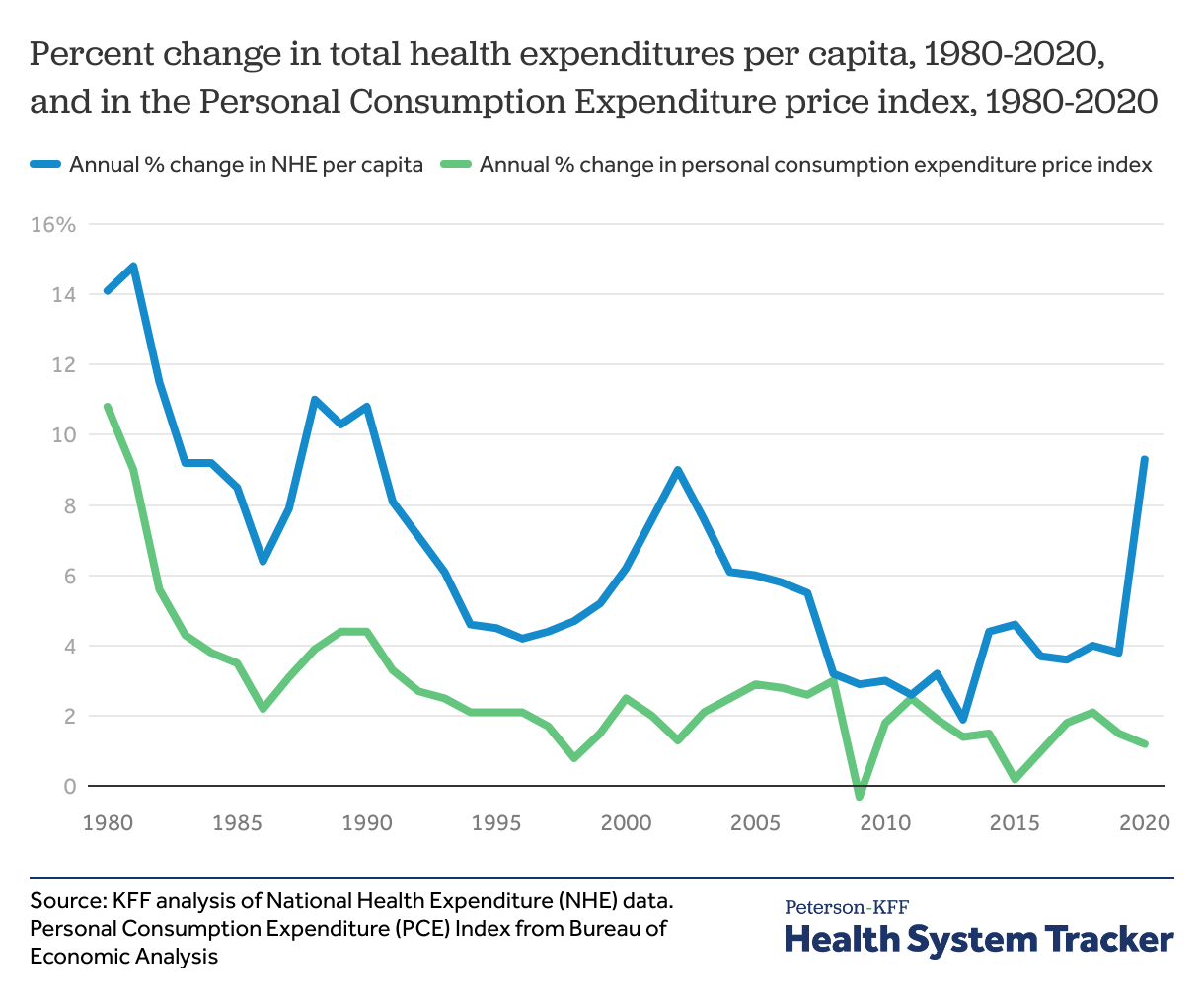
Health spending per capita increased by 9.iii% between 2019 and 2020. The Personal Consumption Expenditure (PCE) price Alphabetize (inflation) grew 1.two%, in line with previous years. Trends going forward may alter. In 2021, prices for food, energy, and motor vehicles grew rapidly. In that location has non yet been a measurable touch on of inflation in the wellness sector at this indicate. Since many provider payment contracts are set in advance, there is a lag time in health sector prices reflecting the inflation in labor, appurtenances, and services.
The Peterson Center on Healthcare and KFF are partnering to monitor how well the U.S. healthcare organisation is performing in terms of quality and toll.


Source: https://www.healthsystemtracker.org/chart-collection/u-s-spending-healthcare-changed-time/#:~:text=Hospital%20spending%20represented%20close%20to,represented%2020%25%20of%20total%20spending.
Belum ada Komentar untuk "what portion of us healthcare spending is due to hospitals"
Posting Komentar